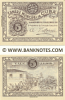
Complete set of 6 emergency notes: 1, 2, 3, 4, 5, 10 Centavos 19 October 1921 – Câmara Municipal de Almodôvar (Front: Portuguese coat of arms. Ornamental denominational design. Back: Igreja do Convento da Nossa Senhora da Conceição church building in the town of Almodovar, Beja District, Alentejo. Watermark: N/a. Predominant colours: Purple, green, brown, blue, grey. Date on the banknote: Municipal hearing of 19 October 1921. Period: 1917-1925. Designer: Câmara Municipal de Almodôvar. Signature: Unidentified (O Presidente da Comissão Executiva). Issuing authority: Câmara Municipal de Almodôvar, Beja District, Alentejo. Demonetized: Unknown. Material: Cotton fiber paper. Printer: Unknown) UNC
Feature: Cold embossed seals
Dimensions: 87 x 61 mm
Catalogue Number: Unknown
Grade/condition: Almost Uncirculated to Uncirculated (AU-UNC / UNC) (almost new, unused, mint) GRADING INFO
Texts: Câmara Municipal de Almodôvar. C.M.A. Deliberação Municipal de 19 de Outubro de 1921. Vale 1 Um Centavo, 2 Dois, 3 Três, 4 Quatro, 5 Cinco, 10 Dez Centavos.
Remark: During the First Portuguese Republic (1910–1926), the municipality of Almodôvar experienced an acute shortage of fractional metallic currency, which disrupted ordinary commercial activity. To mitigate this problem, the City Hall authorized the issuance of municipal banknotes as a form of emergency fiduciary currency. These issuances were considered illegal, since only the Casa da Moeda of Portugal had the legal authority to issue currency. However, their acceptance was based on practical necessity and the trust of the local population. Despite the formal ban on their circulation in 1924, these instruments remained in use following the Revolution of 28 May 1926, only disappearing definitively with the mass introduction of low-denomination metal currency.
Feature: Cold embossed seals
Dimensions: 87 x 61 mm
Catalogue Number: Unknown
Grade/condition: Almost Uncirculated to Uncirculated (AU-UNC / UNC) (almost new, unused, mint) GRADING INFO
Texts: Câmara Municipal de Almodôvar. C.M.A. Deliberação Municipal de 19 de Outubro de 1921. Vale 1 Um Centavo, 2 Dois, 3 Três, 4 Quatro, 5 Cinco, 10 Dez Centavos.
Remark: During the First Portuguese Republic (1910–1926), the municipality of Almodôvar experienced an acute shortage of fractional metallic currency, which disrupted ordinary commercial activity. To mitigate this problem, the City Hall authorized the issuance of municipal banknotes as a form of emergency fiduciary currency. These issuances were considered illegal, since only the Casa da Moeda of Portugal had the legal authority to issue currency. However, their acceptance was based on practical necessity and the trust of the local population. Despite the formal ban on their circulation in 1924, these instruments remained in use following the Revolution of 28 May 1926, only disappearing definitively with the mass introduction of low-denomination metal currency.


 World Banknotes - A